Corporate massage in Lisbon generates average ROI of 6:1, reduces absenteeism by 25-56%, and turnover by 25-33%. Portugal records the EU's highest burnout risk (38.6%), with stress costs of €5.3 billion annually. Companies in Parque das Nações, Avenidas Novas, and LX Factory implement fortnightly programmes with measurable impact.
Key takeaways
- Portugal has the EU's highest burnout risk: 38.6% of workforce at risk, with stress costs of €5.3 billion annually (65% increase since 2020)
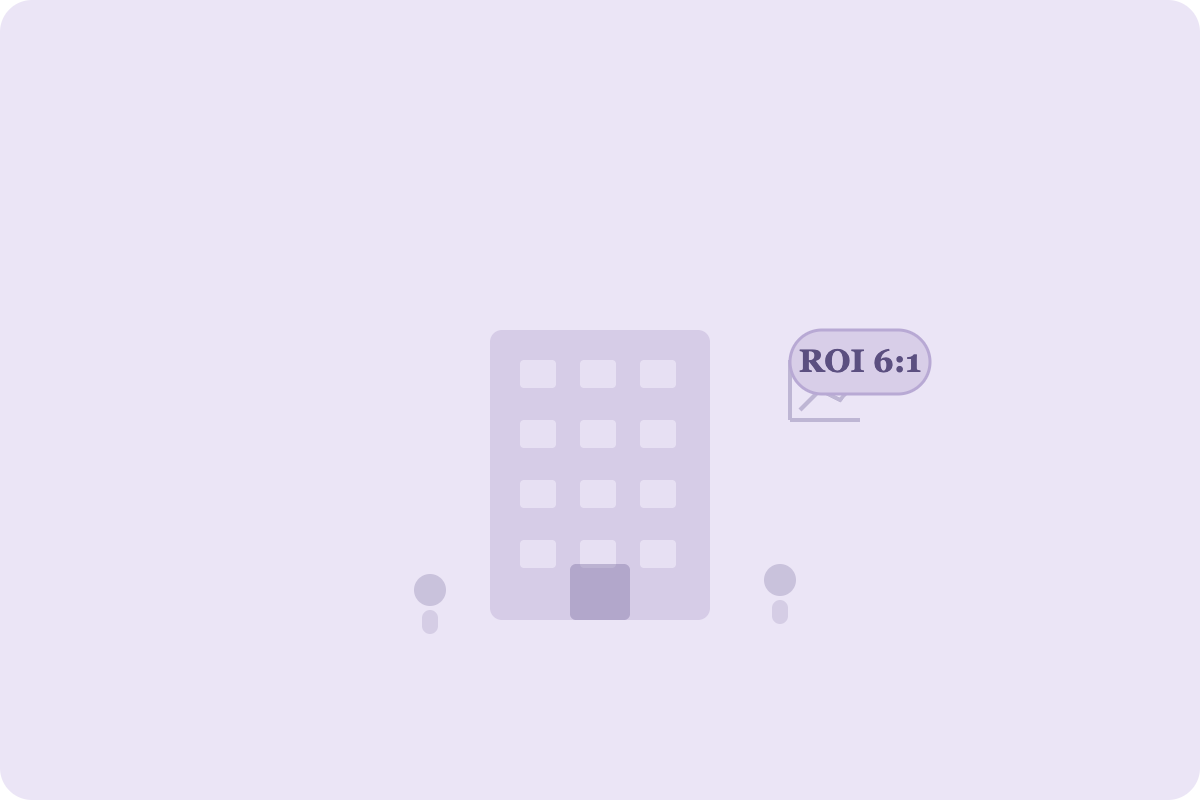
- Documented 6:1 ROI: 77% of companies report ROI >100%, with absenteeism reduction between 25-56% and turnover between 25-33%
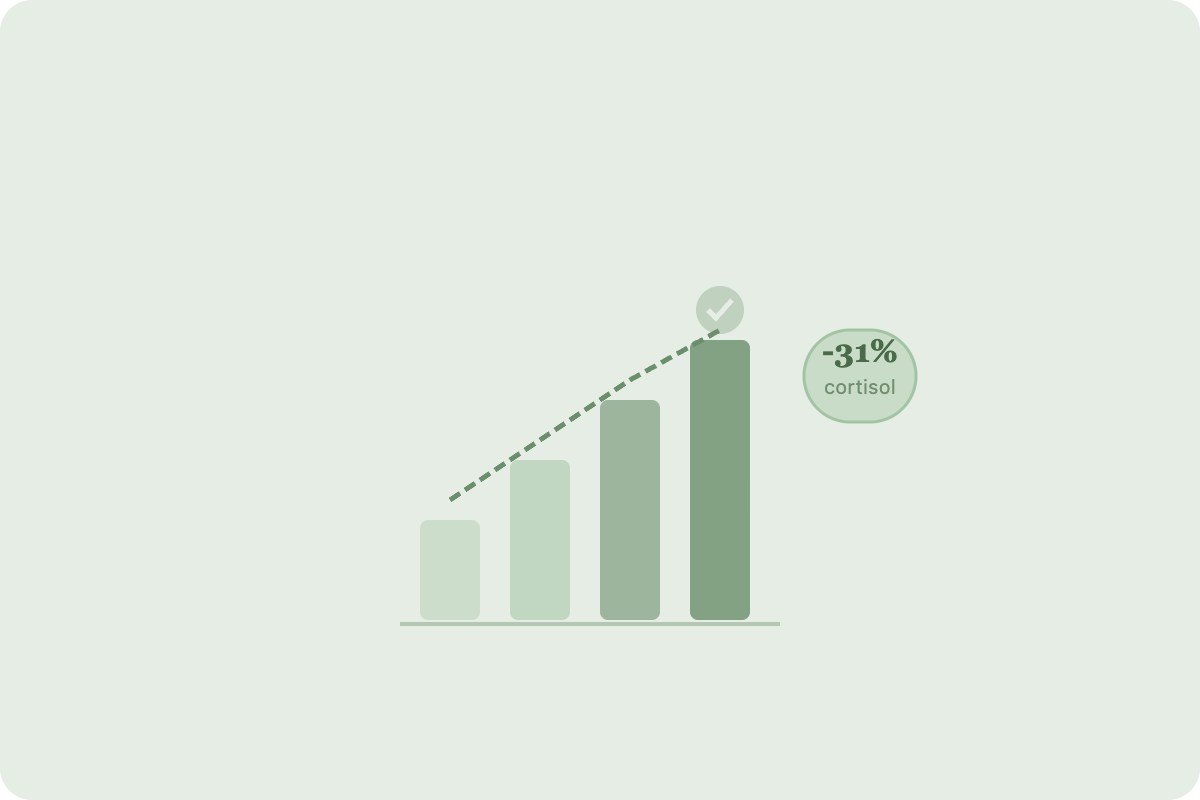
- 15-minute massage improves cognitive tasks and reduces cortisol by 31%, increasing serotonin (28%) and dopamine (31%)
- Lisbon concentrates high-stress sectors: technology in Parque das Nações, finance in Avenidas Novas, startups in LX Factory
- 75% of candidates consider non-salary benefits; 91% of companies increase mental health investment in 2024
The Burnout Crisis in Lisbon
Lisbon has become one of Europe's leading tech hubs. Web Summit established the city as a reference. Unicorn Factory supports startups. Wellhub installed its European headquarters. Companies like Talkdesk, Farfetch, and Feedzai place the Portuguese capital on the global innovation map.
But growth has a cost. Portugal records the highest burnout risk in the European Union. Data from 2024 reveals that 38.6% of the workforce presents mental wellbeing risk. This is the highest rate amongst the 27 member states. Greece follows in second place with 32.8%.
Lisbon's numbers are particularly concerning. The capital concentrates the most affected sectors: technology, consultancy, finance. Portuguese workers have the fourth longest working week in the EU. Workplace stress costs reach €5.3 billion per year, a 65% increase since 2020.
Legal Context: Since 2021, Portugal has prohibited employers from contacting workers outside working hours. The right to disconnect law emerged in response to increased burnout, but practical implementation faces challenges in an increasingly demanding labour market.
Companies need concrete, measurable, and scalable solutions. Corporate massage is not a superficial benefit. It is an intervention with documented ROI, proven cost reduction, and direct impact on talent retention.
Corporate Massage ROI: The Numbers
Corporate massage is not an expense. It is an investment. And the numbers prove it consistently through studies conducted over the past two decades.
Direct Financial Return
Data from 2024 shows that 77% of companies with wellness programmes report ROI exceeding 100%. The average return is 6:1: for every euro invested, the company recovers six euros in healthcare cost and absenteeism reduction.
Amongst CEOs who measure wellness programme ROI, 82% report positive returns. When companies implement structured measurement systems, 95% obtain positive returns. The problem is not intervention effectiveness. It is the absence of measurement.
Healthcare Cost Reduction
The most direct impact occurs in healthcare costs. Studies document an average reduction of $6 for every $1 invested in wellness programmes that include massage. In Europe, where corporate healthcare costs are structured differently, the impact manifests mainly in reduced absenteeism and presenteeism.
Data reveals that 72% of companies reduced healthcare costs after implementing wellness programmes. Amongst HR departments, 91% report reductions in costs associated with sick leave and work-related health problems.
Absenteeism and Turnover
Corporate massage reduces absenteeism between 25% and 56%, depending on programme frequency and integration. Turnover reduction ranges between 25% and 33%. In a Lisbon market where technical talent retention is critical, this impact is financially significant.
To contextualise: replacing a skilled worker costs between 50% and 200% of annual salary, depending on specialisation level. In a Lisbon tech company with 100 employees and 20% annual turnover, reducing that rate to 15% can represent savings exceeding €200,000 annually.
| Metric | Documented Impact | Source |
|---|---|---|
| Average ROI | 6:1 (€6 per €1) | 2024 Meta-analysis |
| CEOs with Positive ROI | 82% | Global Wellness Survey |
| Absenteeism Reduction | 25-56% | Corporate Studies |
| Turnover Reduction | 25-33% | HR Analytics 2024 |
| Productivity Improvement | 97% CEOs report | Workplace Wellness Study |
| Healthcare Cost Reduction | 72% companies | Benefits Research 2024 |
How Massage Acts on Workplace Stress Physiology
Massage impact is not subjective. Touch Research Institute studies document measurable effects in a session of just 15 minutes of chair massage.
Immediate Cognitive Improvement
Workers subjected to a 15-minute corporate massage session demonstrated significant improvement in cognitive tasks. Processing speed increases. Precision errors decrease. Concentration capacity improves.
In a work environment where programmers write code, analysts build financial models, and consultants develop strategies, these cognitive improvements translate directly into higher quality output.
Measurable Hormonal Changes
Biological markers confirm the impact. Cortisol (stress hormone) reduces by an average of 31%. Serotonin increases 28%. Dopamine increases 31%. These are not sensations. These are measurable hormonal changes through analysis.
Chronically elevated cortisol is associated with hypertension, metabolic problems, immune system suppression, and cognitive difficulties. Reducing cortisol levels is not just "feeling better". It is preventing chronic pathologies that generate high healthcare costs.
Lisbon's Specific Context
Lisbon is not a generic market. Geography, dominant sectors, and work culture create specific needs requiring adapted solutions.
Parque das Nações: The Tech Hub
Parque das Nações concentrates tech companies and multinationals. Cisco, Microsoft, Siemens, and dozens of startups operate in this area. Workers are predominantly from the tech sector: programmers, product managers, designers, data analysts.
The stress profile is specific. Long periods sitting. Compromised cervical posture (tech neck). Eye strain. Deadline pressure in agile environments. Constant videoconference meetings. Chair corporate massage, focused on cervical, shoulders, and lower back, is particularly effective.
Companies in Parque das Nações report that fortnightly 15-minute sessions generate greater impact than more expensive but less utilised benefits. Massage at the workplace removes access barriers. There is no need to leave the office, drive, or book an appointment. The therapist comes to the company.
Avenidas Novas: Finance and Consultancy
The Avenidas Novas area concentrates banks, insurers, and consultancy firms. The stress profile differs from the tech sector. Extreme hours during closing periods. Client pressure. Presenteeism culture. Frequent travel.
Burnout data is particularly high in consultancy and finance. Turnover in these companies is structurally higher: many employees leave after 2-3 years. Corporate wellness programmes may not eliminate turnover, but they reduce it and significantly improve employee experience whilst they remain at the company.
Companies in this area tend to implement corporate massage as part of retention packages for mid-level professionals, the segment most vulnerable to leaving for competitors or abroad.
LX Factory and Startups: Culture and Burnout
LX Factory, Beato Creative Hub, and coworking spaces in Alcântara concentrate startups, creative agencies, and media companies. The culture is different: open offices, relaxed environments, non-traditional benefits.
But burnout is real. Startups in growth phase operate with small teams under intense pressure. Each person performs multiple roles. Working hours are long. Stress is high, even when disguised by ping-pong tables and Friday beers.
In these companies, corporate massage functions as a symbol of real care. In a culture where "hustle" is glorified, a structured wellness programme demonstrates that the company values long-term sustainability, not just immediate output.
Baixa and Chiado: Traditional Offices
The historic centre maintains offices of lawyers, architects, and traditional companies. Buildings are old, often without gyms or wellness spaces. Office massage is frequently the only physically viable wellness intervention.
Implementation is simple. The company provides a meeting room or reserved space for half a day. Employees book 15 or 20-minute slots. The therapist brings the massage chair. No permanent infrastructure is required.
Corporate Massage and Talent Attraction
The labour market has changed. Data from 2024 reveals that 75% of candidates consider non-salary benefits when evaluating job offers. Younger generations value wellbeing and balance.
Lisbon competes for tech talent at European level. Salaries are lower than Berlin, London, or Amsterdam. Companies compensate with quality of life, flexibility, and tangible benefits. But "quality of life" needs to be concrete. It cannot be just marketing.
A structured corporate massage programme is a visible, tangible, and regularly utilised benefit. It is not a gym that 10% use. It is not health insurance that only matters when there is a problem. It is a weekly or fortnightly intervention that everyone experiences.
Web Summit and Corporate Wellness: Lisbon annually hosts Web Summit, Europe's largest tech event. Amongst recurring themes: burnout, mental health, talent retention. Companies like Wellhub (formerly Gympass), with European headquarters in Lisbon, position wellness as competitive advantage. The trend is clear: wellbeing is not extra. It is strategy.
How to Implement Corporate Massage: Practical Models
Implementation can assume different formats, depending on company size, budget, and objectives.
Model 1: Fortnightly Chair Sessions (Companies 20-100 Employees)
The therapist visits the company every two weeks. Each employee receives 15 minutes of massage in an ergonomic chair. Focus on cervical, shoulders, lower back, and arms. No need to undress or use oil. The intervention occurs in the office, in a reserved room.
Approximate cost: €200-400 per session (4-8 therapist hours), depending on number of employees. ROI documented through absenteeism reduction and productivity improvement.
Model 2: Individual Vouchers for Home Massage
The company provides monthly or quarterly vouchers. Employees book massages in Lisbon at home at their preferred time. Greater flexibility, especially for remote or hybrid teams.
Advantage: suits remote work and allows longer sessions (60-90 minutes) with techniques like Swedish massage or deep tissue. Disadvantage: lower impact on team culture compared to office sessions.
Model 3: Wellness Events (Startups and SMEs)
Smaller companies or those with limited budgets implement quarterly events. A full day dedicated to wellness: chair massages, stress management workshops, mindfulness sessions. Concentrates investment in specific high-impact moments.
Model 4: Hybrid Programme (Companies +100 Employees)
Combination of office chair sessions (fortnightly) and vouchers for home massage (monthly). Offers regular frequency and individual flexibility. This is the most complete model, suitable for companies with structured wellness budgets.
Barriers and How to Overcome Them
Implementation faces practical obstacles. But all have solutions.
"We Have No Space"
Chair massage requires only 2m². A small meeting room, an open space corner, even a wide corridor works. If there really is no space, the home voucher model solves the problem.
"People Won't Participate"
Experience shows the contrary. When the company communicates the programme well, initial participation can reach 60-80%. After the first sessions, word of mouth increases demand. The usual problem is not lack of participation. It is lack of available slots.
"It's Expensive"
Compared to corporate gyms (utilisation rate 5-15%), premium health insurance, or cash bonuses, corporate massage offers better cost-benefit ratio. €200-400 fortnightly for 50 employees represents €4-8 per person per month. This is less than a transport pass.
"How Do We Measure Impact?"
Three simple metrics: absenteeism rate, turnover, and engagement survey results. Compare 6 months before implementation with 6 months after. If you implement changes only in the massage programme (without other variables), the data will show direct impact.
The Future of Corporate Wellness in Lisbon
The global corporate wellness market is valued at $57.97 billion in 2025, with a projection of $79.37 billion in 2035. Growth is exponential because companies have realised this is not altruism. It is financial strategy.
Data from 2024 reveals that 91% of companies are increasing investment in mental health. The pandemic accelerated awareness. Remote and hybrid work created new challenges. Burnout reached critical levels, especially in Portugal.
Lisbon, as a growing tech hub, has two options. Ignore the problem and accept high turnover, increasing absenteeism, and escalating healthcare costs. Or implement structured wellness programmes with documented ROI.
Corporate massage is not the only solution. But it is one of the most effective, measurable, and scalable. Companies in Parque das Nações, Avenidas Novas, LX Factory, and Baixa are already implementing programmes. Results are consistent: healthier employees, more stable teams, reduced costs.
Implementing Corporate Massage in Your Lisbon Company
RHEA Home Spa has operated in Lisbon since 2019, with corporate massage services for companies between 10 and 500 employees. The implementation process is straightforward:
1. Initial assessment: Identify needs, team size, available space, and objectives (reduce absenteeism, improve retention, position wellness as benefit).
2. Customised proposal: Model of fortnightly, monthly sessions, or individual vouchers. Transparent budget with annual cost forecast.
3. Three-month pilot: Test the programme in a team or department. Measure participation, satisfaction, and preliminary impact.
4. Expansion and measurement: Extend to the entire company. Implement metrics for absenteeism, turnover, and engagement. Evaluate ROI at 6 and 12 months.
Sessions take place between 8am and 8pm, on agreed day and time. The therapist brings all equipment (ergonomic chair, music, hand sanitiser). The company provides only the space.
Lisbon faces Europe's highest burnout rate. Stress costs reach €5.3 billion annually. Corporate massage offers 6:1 ROI, absenteeism reduction up to 56%, and documented productivity improvement. This is not a cosmetic benefit. It is a financially justifiable intervention with decades of evidence.
Request a proposal for your company
Request a Proposal →Frequently Asked Questions
Studies from 2024 document average ROI of 6:1: for every euro invested, the company recovers six euros in healthcare cost and absenteeism reduction. 77% of companies report ROI exceeding 100%. In Lisbon, where stress costs reach €5.3 billion annually and Portugal leads EU burnout risk (38.6%), the impact is particularly relevant. Companies in Parque das Nações and Avenidas Novas report absenteeism reduction between 25-56% and turnover between 25-33% after implementing regular programmes.
Chair massage requires only 2m² of space. A small meeting room, an open space corner, or even a wide corridor works. The therapist brings an ergonomic chair and all necessary equipment. 15-minute sessions do not require employees to undress or use oil. If there really is no available space, the alternative model is individual vouchers for home massages in Lisbon, suitable for remote or hybrid teams.
Parque das Nações concentrates technology (Cisco, Microsoft, startups): deadline stress, compromised cervical posture, long hours sitting. Fortnightly chair massage focused on cervical and shoulders is most effective. Avenidas Novas has finance and consultancy: extreme hours in closing periods, presenteeism culture, frequent travel. More intensive programmes (weekly) during critical periods generate greater impact. LX Factory (startups, agencies) values massage as symbol of real care in a hustle culture.
Fortnightly sessions cost approximately €200-400 per visit (4-8 therapist hours), depending on number of employees. For 50 people, this represents €4-8 per person per month. Measurement: compare absenteeism rate, turnover, and engagement survey results 6 months before vs 6 months after implementation. If you do not implement other simultaneous changes, the data shows direct impact. 95% of companies that measure ROI obtain positive returns.
Yes. Data from 2024 shows that 75% of candidates consider non-salary benefits when evaluating offers. Lisbon competes for talent with salaries lower than Berlin, London, or Amsterdam. Companies compensate with tangible quality of life. Corporate massage is a visible, regularly utilised benefit, unlike gyms (utilisation rate 5-15%). Turnover reduction between 25-33% is documented. For a tech company with 100 employees, lowering turnover from 20% to 15% can save >€200,000 annually.
Portugal records 38.6% of workforce at burnout risk, the EU's highest rate. Factors: fourth longest working week in EU, low salaries forcing overtime, rapid tech sector growth without established wellness culture, high housing costs in Lisbon increasing financial stress. Stress costs rose 65% since 2020, reaching €5.3 billion annually. The right to disconnect law (2021) exists, but practical implementation faces challenges.