Corporate Massage in Lisbon: How It Works
RHEA brings certified massage therapists directly to your office. The setup is simple, the disruption is minimal, and the impact on team wellbeing is significant. Here is how it works, what it costs, and why Lisbon companies are making it a regular part of their operations.

What Corporate Massage Looks Like
There are two main formats, and the right choice depends on your office space and how much time employees can step away from their desks.
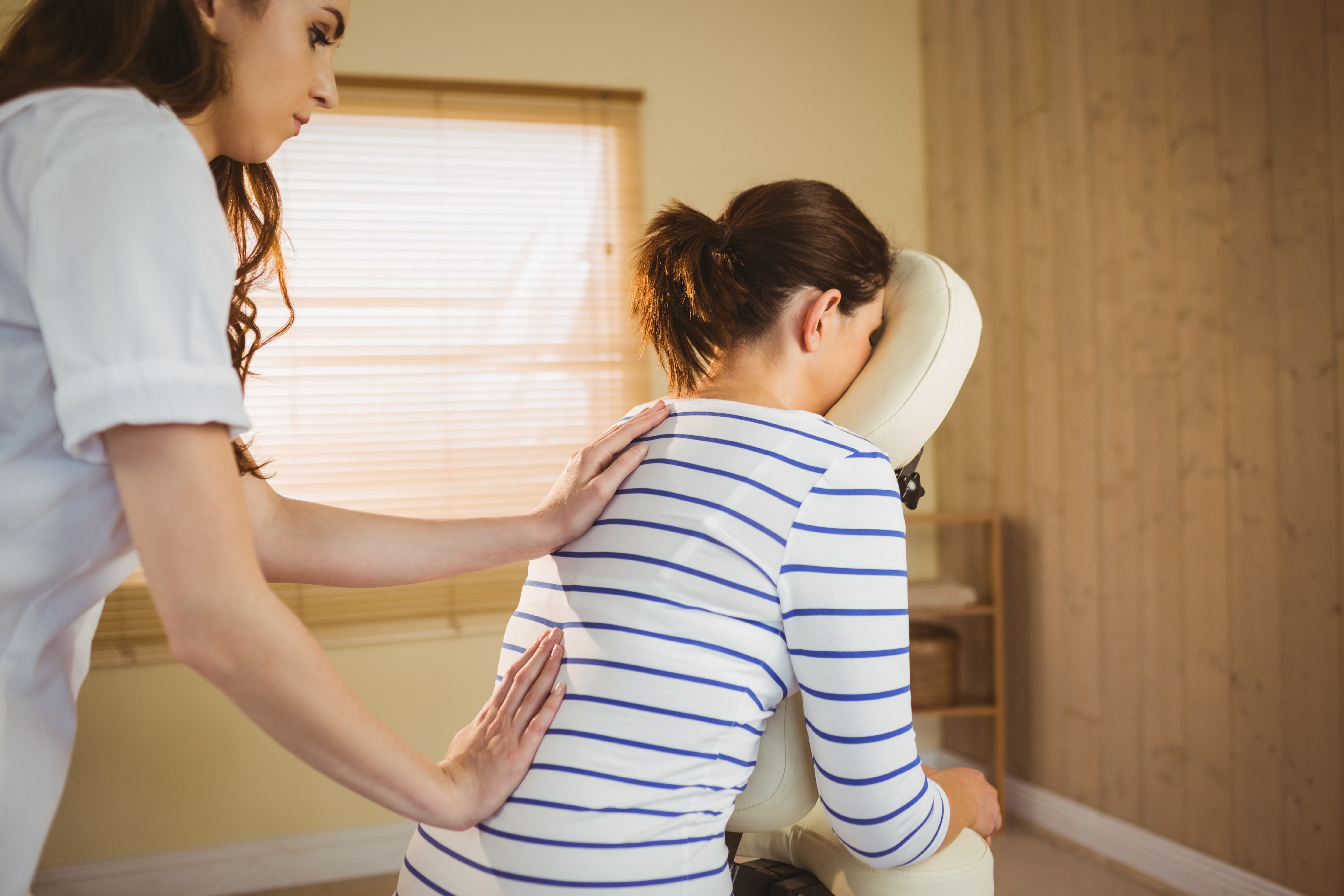
Chair massage: The therapist brings a portable massage chair that fits in a corner of the office, a meeting room, a breakout area, or even a corridor with enough space. Employees remain fully clothed and sit in the chair for 15 to 20 minutes. The therapist works on the neck, shoulders, upper back, arms, and hands. It is quick, effective, and requires no preparation from the employee. They walk back to their desk feeling noticeably lighter.
Table massage: For companies that want to offer a fuller experience, the therapist sets up a professional massage table in a private room. Sessions typically run 30, 60, or 90 minutes. This format allows for a deeper treatment, including full-body work, and is popular for senior leadership, client-facing teams, or as a reward for specific achievements.
Both formats are delivered by the same certified therapists who handle private bookings. The quality is identical. The only difference is the setting.
Why Lisbon Companies Are Investing in This
Lisbon’s professional landscape has changed significantly in recent years. The city has attracted a wave of international companies, remote workers, and startups. Competition for talent is real, and the companies that retain their best people are often those that go beyond the standard benefits package.
Employee retention: In a market where skilled professionals have options, small gestures of care make a measurable difference. A monthly or fortnightly massage programme tells employees that their physical wellbeing matters, not just their output. Exit interviews consistently show that workplace culture and perks influence the decision to stay or leave.
Stress reduction: Desk work takes a physical toll. Hours of sitting, screen time, and repetitive mouse movements create chronic tension in the neck, shoulders, and wrists. Over time, this leads to discomfort, reduced focus, and increased sick days. Regular massage may help address these issues. For a deeper look at the relationship between massage and stress, read our article on massage for stress and anxiety.
Productivity: A 15-minute chair massage in the middle of the afternoon can reset focus more effectively than a coffee break. Employees return to their desks with reduced tension, improved circulation, and a clearer head. Several Lisbon tech companies that have adopted regular massage programmes report that afternoon productivity improves noticeably on massage days.
Team morale: There is something about shared wellness experiences that brings teams closer. When colleagues are queuing for their turn in the massage chair, conversations happen that would not occur in a meeting room. It is informal, human, and positive.
Lisbon Office Environments
Every office is different, and our therapists adapt to whatever space is available.
Parque das Nações: Modern office towers with large floor plates, meeting rooms, and dedicated wellness spaces. Many companies here already have the infrastructure for table massage: a private room with a door that closes, enough floor space, and reasonable quiet. The corporate parks along the riverfront are purpose-built for this kind of service.
LX Factory and Alcantara: Creative agencies, design studios, and tech startups in converted industrial spaces. The rooms are often open-plan, which makes chair massage the better option. A corner near a window, a mezzanine, or a quieter section of the office works well. The informal atmosphere of these spaces means employees are typically relaxed about the concept from the start.
Avenidas Novas and Saldanha: Professional services firms, law offices, financial companies. These tend to have formal meeting rooms that convert easily into treatment spaces. Table massage is popular here, particularly for partners and senior staff who value privacy and a more thorough session.
Baixa and Chiado: Smaller offices in historic buildings. Space can be tight, but chair massage fits almost anywhere. Even a cleared corner of a shared office provides enough room for the portable chair and the therapist to work comfortably.
How to Set It Up
Setting up corporate massage through RHEA involves a brief planning conversation, not a lengthy procurement process.
Step one: Tell us about your office. How many employees, what kind of space is available, and what format you prefer (chair or table). If you are unsure, we can visit the office or review photos to recommend the best approach.
Step two: Choose the frequency. Options range from a single session for a team event to weekly or fortnightly programmes. Some companies book monthly sessions as a standard benefit. Others schedule them around high-pressure periods: end of quarter, product launches, tax season.
Step three: We propose a schedule. For chair massage, a typical arrangement is one therapist for four to five hours, rotating employees through 15 to 20 minute slots. For table massage, we schedule individual appointments of 30 to 60 minutes in a private room.
Step four: The therapist arrives on the agreed day, sets up, and begins. There is no complex onboarding. No equipment to purchase. No contracts to sign unless you want a recurring arrangement with guaranteed pricing.
What It Costs
RHEA’s prices start from €95 per session for individual table massage of 60 minutes. For corporate chair massage programmes, pricing is based on the number of hours booked and the frequency of visits. There are no travel fees within Lisbon.
Compared to hotel spa corporate packages, which can run to €150 or more per person and require employees to leave the office, an on-site mobile massage service is more affordable, more practical, and causes less disruption to the working day.
For companies that want to explore how corporate massage is handled in Porto, we have a dedicated article on corporate massage in Porto with specific details for that city.
Common Concerns from Employers
“Will it disrupt the office?” No. Chair massage is quiet and contained. The therapist works in one spot, and employees rotate through on a schedule. Table massage happens behind a closed door. Neither format generates noise, mess, or significant disruption.
“What about hygiene?” The therapist brings clean sheets, towels, and sanitised equipment for every session. For chair massage, a fresh face cradle cover is used for each person. Standards are the same as a professional clinic.
“Do employees need to undress?” Not for chair massage. Employees stay fully clothed. For table massage, the level of undress is the employee’s choice and the therapist drapes professionally at all times.
“What if someone has an injury or condition?” Therapists conduct a brief intake before each session, asking about injuries, areas to avoid, pressure preferences, and any medical conditions. The treatment is adapted accordingly.
Getting Started
The simplest way to begin is with a trial session. Book a single visit with one therapist, let a handful of employees try it, and gather feedback. Most companies that trial corporate massage end up making it a regular fixture. The response from employees is consistently positive, and the cost is modest relative to the impact on morale and retention.
Sessions are available from 8am to midnight, including weekends for company events or retreats. Free cancellations mean there is no risk if plans change. Contact RHEA with your office location, team size, and preferred format, and we will propose a plan within 24 hours.
Frequently Asked Questions
How much space does a chair massage need?
Roughly 1.5 by 1.5 metres, so a corner of any room, a wide corridor, or a breakout area works perfectly.
Can employees choose their own massage type?
For chair massage, the format is standardised (upper body, 15-20 minutes). For table massage, each employee can communicate their preferences directly to the therapist before the session begins. Some prefer neck and shoulders, others want a full-body treatment, and the therapist adjusts accordingly. This personalisation is one of the reasons table massage tends to generate even higher satisfaction scores in employee feedback.
Do you offer regular programmes or only one-off sessions?
Both. Many Lisbon companies start with a single trial session and then move to a weekly or monthly schedule. We offer flexible arrangements with no long-term contracts required.
Is this suitable for small teams?
Yes, even a team of five benefits from a half-day chair massage visit and there is no minimum team size.
Can we use this for a company event or retreat?
Absolutely. We regularly provide massage services at corporate retreats, team-building days, product launches, and end-of-year celebrations. Multiple therapists can be arranged for larger groups.